
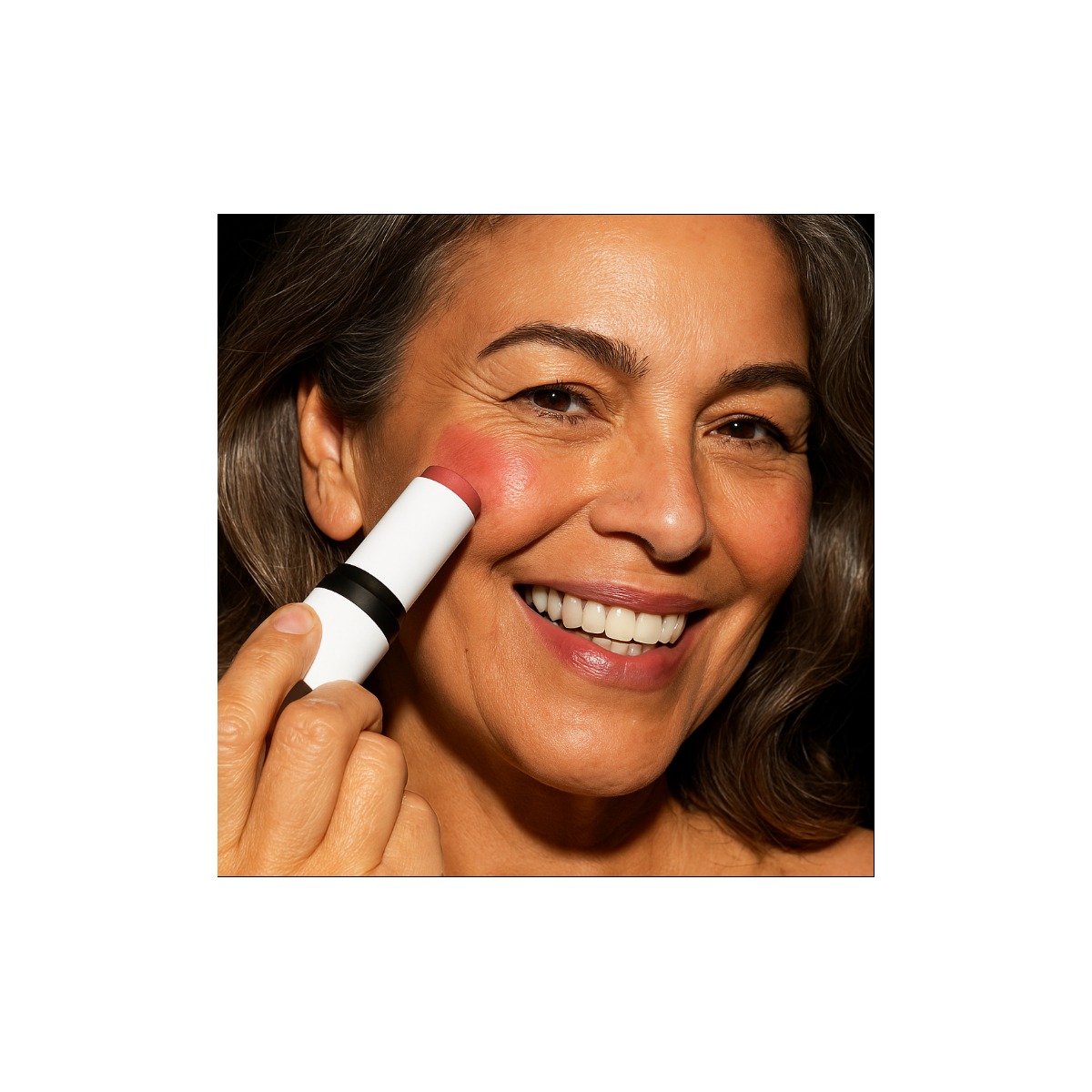
There’s a moment many of us experience somewhere in our 40s or 50s. We apply our makeup the same way we always have, step back from the mirror… and something just looks off. The blush that once made us look healthy and fresh now seems to sit strangely on the skin. It might look patchy, too bold, too dull, or even aging.
If that sounds familiar, you’re not imagining it, and you’re definitely not doing anything wrong.
Blush is often the first makeup product that starts to misbehave as our skin matures. Changes in texture, dryness, and elasticity mean that formulas which once worked beautifully may now emphasize exactly what we’d rather soften.
We’ll talk honestly about why blush often looks wrong on mature skin, explore the real differences between cream and powder blush, and explain why cream formulas are generally the best blush for mature skin. The goal isn’t to chase youth, but to enhance the skin we’re in, comfortably, confidently, and naturally.
Why Blush Becomes Tricky as Skin Matures
(Best blusher for mature skin over 50)
As we age, our skin doesn’t suddenly become “problematic.” It simply changes, and makeup has to change with it
.
From our late 40s onward, skin typically becomes:
- Drier due to decreased oil production
- Thinner and more delicate
- Less firm and elastic
- More textured, with fine lines and enlarged pores
Blush interacts directly with these changes, which is why it can suddenly feel unpredictable.
Common Blush Issues on Mature Skin
Many women over 50 experience:
- Blush clinging to dry patches
- Color settling into fine lines
- A powdery or chalky finish
- Uneven blending or patchiness
- Blush that looks heavy even when applied lightly
What’s important to understand is that these issues usually have nothing to do with technique. They’re almost always caused by using formulas designed for oilier, smoother, younger skin.
That’s where the cream vs powder conversation really matters.
Cream vs Powder Blush: Understanding How Each Behaves
When choosing the best blush for mature skin, the texture of the product matters just as much as the color.
Powder Blush on Mature Skin
Powder blush is made of dry pigments pressed or baked into a compact. On youthful skin with natural oils, powder can blend seamlessly. On mature skin, however, powder often:
- Sits on top of the skin instead of blending in
- Emphasizes dryness and texture
- Settles into fine lines
- Loses its smooth appearance throughout the day
Even high-end powders can struggle once skin becomes drier and less elastic.
Cream Blush on Mature Skin
(Cream blush for mature skin over 60)
Cream blush behaves completely differently.
Instead of resting on the surface, cream formulas meld into the skin, especially when applied over moisturized skin or a lightweight base.
Cream blush:
- Moves naturally with facial expressions
- Doesn’t settle into lines
- Reflects light softly
- Gives the appearance of healthy, hydrated skin
This is why professional makeup artists working with older women almost always reach for creams, balms, or gels instead of powders.
Why Cream Blush Looks More Natural on Aging Skin
One of the biggest advantages of cream blush is how it responds to movement.
Our faces are constantly in motion, smiling, talking, laughing. Powder blush stays fixed while the skin moves underneath it, which can make texture more noticeable. Cream blush, on the other hand, moves with the skin, focusing attention on color and glow rather than lines.
The result is a fresher, more believable flush, the kind that looks like it’s coming from within the skin, not sitting on top of it.
If you’re new to pro-age makeup, you may also enjoy our guide on building a simple, flattering everyday routine for mature skin.
Gel and Balm Blushes: Lightweight Alternatives
(Best gel blush)
If traditional cream blush feels intimidating, gel and balm formulas can be a beautiful option, especially for women who prefer minimal makeup.
Gel Blush
Gel blush is:
- Extremely lightweight
- Sheer and buildable
- Ideal for sensitive or reactive skin
It gives a soft wash of color that mimics a natural flush, making it one of the best choices for mature skin that prefers subtlety.
Balm Blush
Balm blushes are:
- More hydrating
- Slightly thicker than gels
- Very forgiving on dry or textured skin
They’re especially popular with women who want an easy, finger-applied product that blends effortlessly.
Both gels and balms can easily qualify as the best blush for mature skin when hydration and comfort are priorities.
What to Look for in the Best Blush for Aging Skin
Shopping for blush becomes much easier once you know what truly matters.
1. Cream, Balm, or Serum Textures
(Best cream blush for sensitive skin)
The most flattering blushes for mature skin are typically:
- Cream sticks
- Pot creams
- Balms
- Serum-based blushes
Avoid formulas described as “ultra-matte,” “powder finish,” or “oil-absorbing.”
2. Hydrating Ingredients
Blush should support the skin barrier, not work against it.
Look for ingredients like:
- Hyaluronic acid
- Squalane
- Shea butter
- Jojoba or marula oil
Hydration helps blush blend more smoothly and prevents it from breaking apart as the day goes on.
3. Buildable, Sheer Pigment
Highly pigmented blush can be difficult to control on mature skin.
Buildable formulas allow you to:
- Start sheer
- Adjust gradually
- Avoid harsh edges
Soft layers always look more youthful than bold color applied all at once.
4. Natural, Skin-Like Finish
(Best blush and highlighter for mature skin)
The most flattering finish for aging skin sits somewhere between matte and shiny.
Look for descriptions like:
- Satin
- Natural glow
- Soft radiance
Avoid heavy shimmer or glitter, which can emphasize texture and fine lines.
How to Apply Blush on Mature Skin for a Natural Look
Even the best blush can look wrong if applied the same way we did decades ago.
Use Less Product Than You Think
Mature skin holds pigment differently. Start with half the amount you think you need.
You can always build, but over-application is what makes blush look aging.
Adjust Placement for Lift
As cheeks naturally descend with age, placement becomes more important.
Try:
- Applying blush slightly higher on the cheekbones
- Blending upward and outward
- Avoiding placement too close to the nose
This creates a subtle lifting effect without looking unnatural.
Use Fingers or a Soft Brush
Fingers warm cream blush beautifully, helping it melt into the skin.
If using a brush:
- Choose a soft, dense brush
- Press or stipple instead of swiping
This prevents lifting base makeup and keeps the finish smooth.
Keep Layers Light
Blush should enhance the skin, not dominate it.
Thin layers give the most natural, youthful result.
Common Blush Mistakes That Can Age the Face
Sometimes it’s not the product, it’s the habit.
Using Too Much Blush
Heavy blush draws attention to texture and sagging.
Subtle color always looks fresher.
Choosing Heavy Powder Finishes
Powder can make skin appear dry and flat, especially later in the day.
Incorrect Placement
Low or overly rounded placement can pull the face downward visually.
Skipping Skin Prep
Blush applies best over:
- Well-moisturized skin
- Lightweight foundation or tinted moisturizer
Dry skin leads to patchy blush, no matter the formula.
Is Powder Blush Ever Okay?
For some women, powder blush can still work, especially if skin isn’t very dry.
If you prefer powder:
- Prep skin thoroughly
- Use a very light hand
- Choose baked or satin formulas rather than dry mattes
That said, for most women over 50, cream-based formulas simply offer more forgiveness and a more skin-enhancing finish.
Blush That Enhances, Not Hides
The best blush for mature skin isn’t about pretending we’re younger. It’s about choosing formulas that respect where our skin is now.
Cream blush sticks, balms, and gels tend to work better because they:
- Support hydration
- Move naturally with the face
- Soften texture rather than emphasize it
- Create a healthy, believable glow
Blush should make you look rested, vibrant, and alive, not powdered, flat, or overdone.
Pro-age beauty is about enhancement, not erasure. Thoughtful spaces like a-beautifulwoman.net reflect this shift, encouraging women to work with their skin instead of against it.
Because beauty doesn’t fade with age, it simply evolves.
Dermatologists at the American Academy of Dermatology note that skin naturally becomes drier and thinner with age, making hydration increasingly important.